Imagine this, it’s mid-July. The sun is warm on your face as you settle into the grass for a picnic lunch. Wildflowers frame your view, and beyond them rise the snow-capped peaks of the Mont Blanc Massif. No schedule, no pressure—just you, the trail, and the freedom to pause whenever you please. This is the Tour du Mont Blanc, solo.
Many beginners ask, “Why do it alone?” The answer is right there in that moment: you set your own pace, stop when the view steals your breath, and take a nap in the sun if you feel like it. Hiking solo is not about isolation—it’s about freedom, presence, and discovering what you’re capable of.
When to Hike & Weather
Choosing when to tackle the Mont Blanc Circuit can make or break your solo adventure. Go too early, and snow still clings to the high passes, forcing detours. Go too late, and you might find huts shuttered for the season. Hit the peak summer months, and you’ll enjoy warm days and long daylight—but you might also find yourself queuing for a photo at the viewpoints. I’ve experienced it all. The crisp solitude of September mornings, the bustle of August afternoons, and the sudden thunderstorms that can roll in at any time. Here’s how each season stacks up.
| Season | Months | Pros | Cons |
| Spring | Late May–mid June | Fewer crowds, wildflowers starting to bloom, cooler hiking temps, early-season peace | Some snow may linger on high passes, certain huts or facilities may not be open, shorter days |
| Summer | Late June–August | Long daylight hours, stable weather, minimal snow on route, all huts and services open | Most crowded season, higher prices, popular viewpoints and huts can be busy |
| Autumn | Early–mid September | Crisp, clear air; stunning autumn colours; fewer hikers than summer; quieter huts | Shorter daylight hours, cooler mornings and evenings, some services begin closing |
| Winter | November–April | Unique snow-covered landscapes, possibility for ski touring | Not suitable for hiking without mountaineering experience and equipment; many huts closed; avalanche risk |
Planning & Booking
You’ve nailed down the best time to go—now comes the fun part (well, fun for me… maybe less so for you): planning. You settle at your desk with a fresh mug of coffee, open your laptop, and… instantly feel your stomach drop. Ten tabs open in under two minutes. One blog says huts book out a year in advance; another insists you can wing it. Someone mentions permits—do you even need one? The clock’s ticking, your to-do list is growing, and the Tour du Mont Blanc is starting to feel like a jigsaw puzzle with missing pieces.
Don’t worry—this section will cut through the noise. I’ll walk you through the key things to book, the timelines to keep in mind, and what you can skip entirely—so you can focus on the excitement, not the overwhelm.
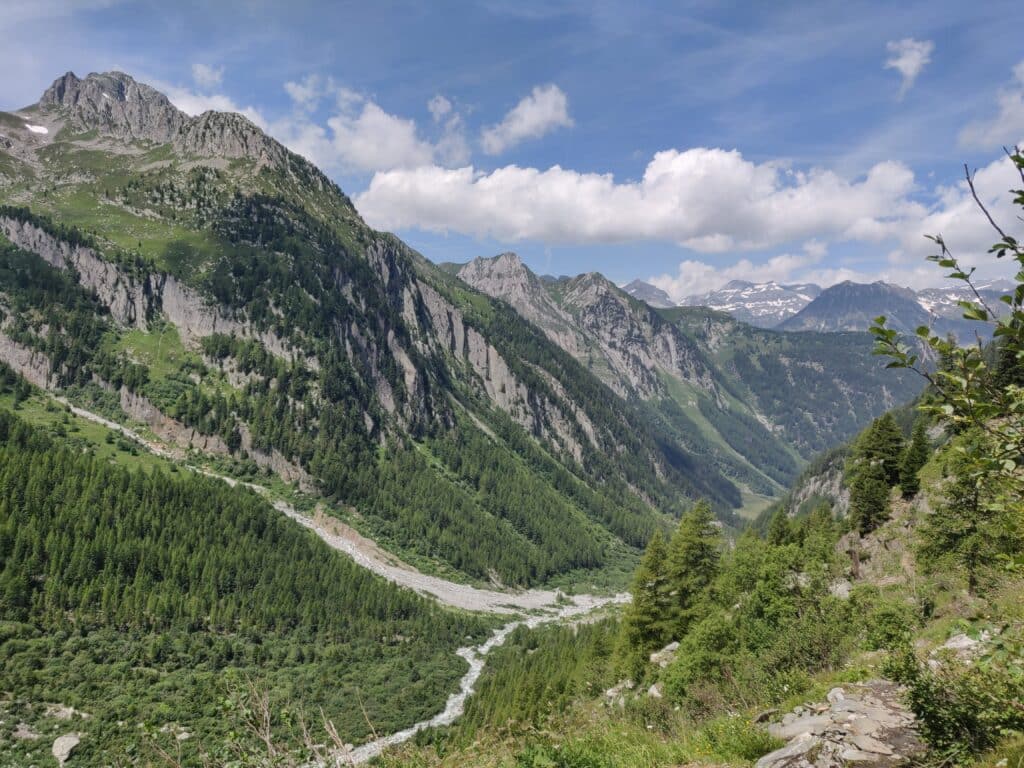
1. Decide Your Route & Direction
- Why it matters: The TMB can be hiked clockwise or counterclockwise, with multiple starting points (Chamonix, Les Houches, Courmayeur, etc.). Your choice affects scenery, difficulty, and hut availability.
- Action: Pick a start point that’s easy for you to reach solo and choose a direction based on your fitness and crowd preferences. I started in Switzerland as I was coming from Geneva.
2. Choose Your Trip Length & Pace
- Why it matters: The TMB can take 7–12+ days depending on fitness, rest days, and side trips. Solo hikers often like a slower pace for flexibility and recovery.
- Action: Plan your daily distances. Aim for 12–18 km per day if you’re new to multi-day hiking. You can cut sections off by utilising the Mont Blanc Tunnel.
3. Book Your Accommodation (2–6 months in advance for peak season)
- Why it matters: Refuges, gîtes, and hotels along the route fill up fast—especially in July and August. Walking solo means you need a guaranteed bed at the end of the day. It also gives you the option to be flexible. It is much easier to get one bed in a hut.
- Action: Reserve all huts for your chosen nights. Use the Refuges.info database or the official hut websites.
- Tip: Book earlier if you want private rooms or specific refuges.
4. Check If You Need Permits
- Why it matters: Most of the TMB doesn’t require permits, but some side routes or national parks have restrictions. Rules can change year-to-year.
- Action: Check the latest regulations on the official TMB or local tourism websites before finalizing plans.
Camping vs Huts
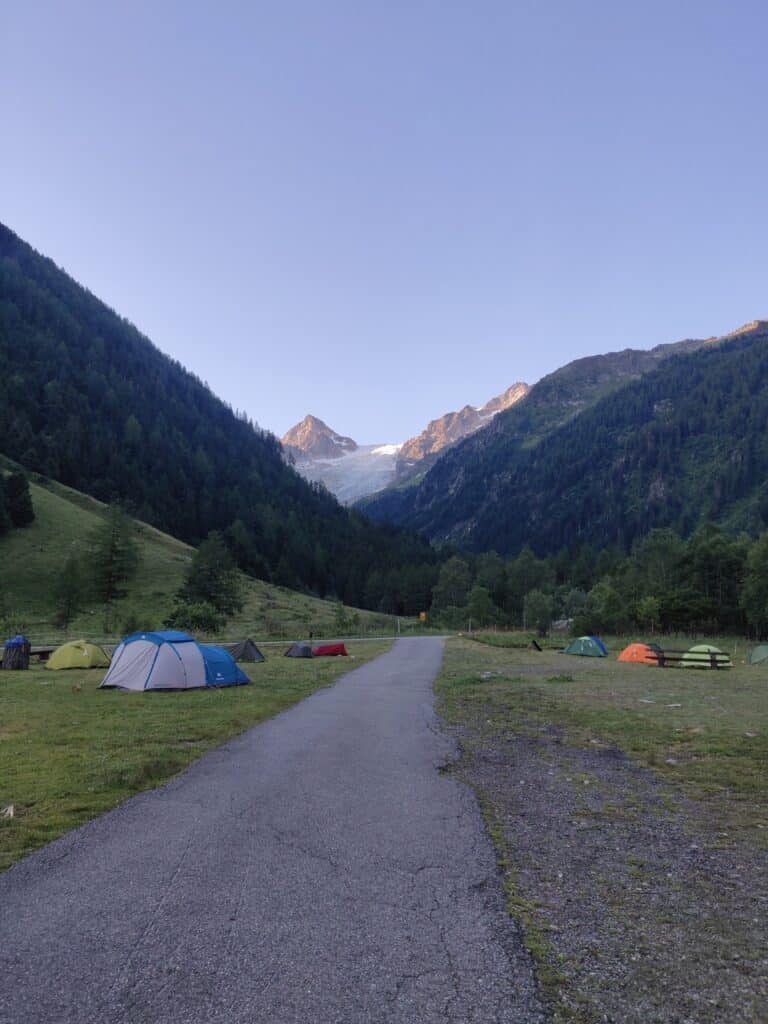
You’re five days in on the Tour du Mont Blanc. Your feet are aching and your blister tape is peeling off. Your only thought is bed. You reach camp, only to find the prime spots taken. Your tent ends up wedged beside the shower block, serenaded by running pipes and zipping fly screens.
Whether you’re a camper, a hut-dweller, or a hotel enthusiast. Your choice of accommodation will shape your TMB experience. Here’s how they compare:
| Option | Pros | Cons | Cost (per night) | Gear Needed |
| Camping | Cheapest option, beautiful settings, freedom to move | Carry more gear, weather exposure, limited facilities | €5–€20 | Tent, sleeping bag, mat, cooking kit (if self-catering) |
| Refugios | Hot meals, dry bed, social atmosphere | Bunk rooms (no privacy), can be noisy, need advance booking | €45–€70 (half-board) | Sleeping bag liner, earplugs |
| Hotels | Privacy, comfort, hot showers | Most expensive, often in towns (off-route) | €70–€150+ | None beyond hiking kit |
Pro Tip: In the high season you will want to book in advance as the good options will sell out. Some of the mountain huts won’t take bookings. As it is first in, first served. Here are some key booking websites to find your accommodation once you have our route sorted.
- Budget, comfort, and safety comparisons.
- Explain jargon – refigio, col, stage
Food and Water on the Trail
You’re in the last hour of your day’s hike. The sun is beating down, your mouth feels dry, and you’re rationing the last warm sip of water from your bottle. Your energy bar wrapper crinkles in your pocket—empty. This is the last place you want to be on the Tour du Mont Blanc. Now imagine the opposite: taking your final steps with a cold drink in hand, plenty of energy left, and a hearty dinner waiting. The difference? Planning your food and water.
Meal Options on the TMB
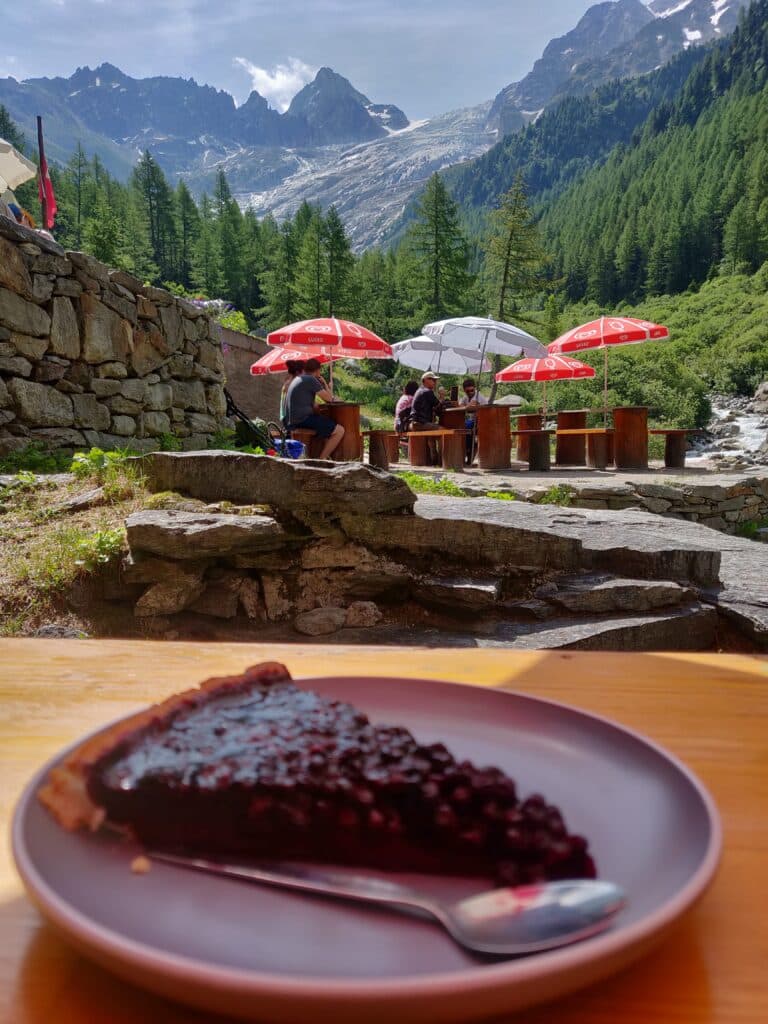
Accommodation on the TMB often includes half board or full board:
- Half Board – Dinner and breakfast provided; you arrange your own lunch.
- Full Board – Dinner, breakfast, and a packed lunch included.
If you prefer flexibility or have dietary needs, you can self-cater. The major towns, such as Chamonix and Courmayeur, and several villages along the way have supermarkets where you can stock up on trail snacks, fresh fruit, or quick-cook meals.
Snack & Lunch Strategy
Even if your accommodation provides meals, you’ll want quick fuel for the trail. Think:
- Energy or muesli bars
- Nuts and dried fruit
- Cheese and cured meat
- Fresh fruit from village markets
A good rule of thumb: eat something small every 1–2 hours to keep your energy steady.
Water on the TMB
Most villages have public water fill points, often with safe drinking water. To stay hydrated:
- Carry a hydration bladder (2–3L) or two 1L bottles.
- Refill every chance you get, especially in hot weather.
- In more remote stretches, consider carrying a small water filter or purification tablets as a backup.
Best Starting Points for the Tour Du Mont Blanc
One of the great things about the TMB is that it’s a loop. You can start anywhere and still cover the full circuit. That said, some towns make for a smoother and more stress-free beginning, especially if it’s your first big solo trek.
1. Chamonix, France
Chamonix is arguably the most popular starting point. Nestled in a dramatic alpine valley with glaciers spilling down from Mont Blanc itself, it’s buzzing with outdoor energy. You’ll find plenty of gear shops, supermarkets to stock up on supplies, and accommodation to suit every budget.
- Pros: Excellent transport links from Geneva Airport (about 1 hr 30 min by shuttle), great place to acclimatise, lots of services for hikers.
- Cons: Very busy in peak summer, accommodation can be pricey if booked late.
2. Les Houches, France
Technically part of the Chamonix Valley, Les Houches is a quieter and more affordable start. Many hikers choose it because it’s right on the TMB route and you can hit the trail without taking extra transfers.
- Pros: Directly on the TMB, cheaper accommodation than Chamonix.
- Cons: Fewer amenities compared to Chamonix.
3. Courmayeur, Italy
On the Italian side of the Mont Blanc Massif. Courmayeur is a charming mountain town with cobbled streets, espresso bars, and incredible views of the Mont Blanc. It’s also an excellent choice if you want to start with some of the trail’s most dramatic sections.
- Pros: Great Italian food, lively town atmosphere, good access from Geneva, Turin, and Milan.
- Cons: A bit trickier to reach than Chamonix—usually requires a transfer through the Mont Blanc tunnel.
4. Champex-Lac, Switzerland
If you want a quieter start away from the busiest trailheads. Champex-Lac offers a serene alpine lake setting. It’s less crowded, making it ideal if you want to ease into your solo adventure.
- Pros: Peaceful start, beautiful scenery.
- Cons: Fewer transport links, smaller range of services.
Beginner Tip: If you’re nervous about starting alone. Chamonix and Courmayeur give you the easiest logistics and the most opportunities to meet other hikers from day one. For a more low-key entry, Les Houches or Champex-Lac are great alternatives.
How to Navigate the Tour Du Mont Blanc Solo
It was day three of my solo Tour du Mont Blanc. I’d just crossed from Switzerland into Italy, the sun had been unrelenting all day, and fatigue was starting to creep in. A few hours from Courmayeur, I realised I wasn’t on the trail anymore. I was following the road. Not exactly the mountain adventure I’d signed up for.
The good news? I didn’t panic. I knew the general direction of Courmayeur and eventually found my way back onto the trail. But that little detour taught me something every beginner solo hiker should know. Navigation is just as important as your boots or backpack. Here’s how to keep yourself on track:
1. Follow the trail markers (your first line of defense)
Each country on the TMB uses different symbols, so know what to look for:
- France: Red and white painted stripes
- Italy: Yellow markings
- Switzerland: White-red-white
These are often painted on rocks, trees, or posts—keep your eyes up, not just on your feet.
2. Carry a physical map (the backup you’ll be glad you have)
You can pick up maps at accommodations, shops, or tourist info centers along the route. Free ones aren’t always detailed, so consider investing in a proper TMB trail map. A paper map doesn’t run out of battery and can get you out of tricky spots.
3. Use apps and GPS (the modern safety net)
Apps like AllTrails or Maps.me let you see exactly where you are in real time. Just make sure to download maps offline before you go, since reception can be spotty. Carry a small power bank to keep your phone charged.
Beginner tip: Never rely on a single method. Think of navigation as a three-layer system—markers first, maps second, GPS last. That way, even if you’re tired, your phone dies, or you miss a signpost, you’ve still got options to stay safe and confident on the trail.
10 Day Sample Tour Du Mont Blanc Itinerary For Solo Hikers
Day 1: Chamonix → Les Houches → Les Contamines
- Distance: ~18 km (6–7 hrs)
- Highlights: Cable car from Chamonix to Les Houches (optional), forested trails, suspension bridge, small alpine villages.
- Overnight: Refugio or hotel in Les Contamines.
Day 2: Les Contamines → Col du Bonhomme → Les Chapieux
- Distance: ~18 km (7–8 hrs)
- Highlights: Big climb over Col du Bonhomme and Col de la Croix du Bonhomme; stunning alpine meadows.
- Overnight: Auberge in Les Chapieux.
Day 3: Les Chapieux → Col de la Seigne → Courmayeur (Italy)
- Distance: ~21 km (7–8 hrs)
- Highlights: Crossing into Italy, sweeping views of the Mont Blanc massif, long descent into Courmayeur.
- Overnight: Hotel/hostel in Courmayeur.
Day 4: Rest & explore Courmayeur
- Recharge day—wander the old town, enjoy Italian food, and give your legs a break.
Day 5: Courmayeur → Rifugio Bonatti
- Distance: ~12 km (4–5 hrs)
- Highlights: Balcony trail with some of the best views of the Italian side of Mont Blanc.
- Overnight: Rifugio Bonatti (famous TMB hut).
Day 6: Rifugio Bonatti → La Fouly (Switzerland)
- Distance: ~20 km (7–8 hrs)
- Highlights: Cross Grand Col Ferret into Switzerland, green valleys, grazing cows with bells.
- Overnight: Guesthouse or campsite in La Fouly.
Day 7: La Fouly → Champex-Lac
- Distance: ~15 km (5–6 hrs)
- Highlights: Gentle valley walking, traditional Swiss villages, beautiful Champex Lake.
- Overnight: Hotel or B&B in Champex.
Day 8: Champex-Lac → Trient
- Distance: ~16 km (6–7 hrs)
- Highlights: The “Bovine Route” through forests and meadows (less demanding than the Fenêtre d’Arpette).
- Overnight: Auberge or hut in Trient.
Day 9: Trient → Col de Balme → Argentière (France)
- Distance: ~15 km (6–7 hrs)
- Highlights: Cross back into France via Col de Balme, spectacular views of the Chamonix Valley.
- Overnight: Hostel or hotel in Argentière.
Day 10: Argentière → Lac Blanc → Chamonix
- Distance: ~15 km (6–7 hrs)
- Highlights: Famous Lac Blanc, breathtaking balcony trails, final descent to Chamonix.
- Overnight: Celebrate with a meal in Chamonix!
Wrap Up
We’ve covered everything you need to know to set out on your own Tour du Mont Blanc adventure. When to go, how to plan and book, what to eat and drink on the trail, the best starting points, and how to navigate with confidence. You even have a sample 10-day itinerary to shape your own journey.
Remember, this is just a guide. The real magic of the TMB comes from making it your own. Choose your pace, stops, and experiences that suit you. Hiking it solo can feel daunting. It is also one of the most empowering adventures you can take on.
If you want to dive deeper, I recommend two excellent guidebooks:
- Trekking the Tour of Mont Blanc by Kev Reynolds
- The Tour of Mont Blanc: Complete Two-Way Trekking Guide by Kingsley Jones
Both are packed with detailed maps, route options, and insider tips.
Use what you’ve learned here as your foundation. Then go build your own story on the trail. Trust me—from my own solo hike, I can tell you it’s an experience that will stay with you for life. You can check out my detailed experience here.
To continue reading on the Tour Du Mont Blanc. Check out my solo adventure here.