
You’re locked in for the Tour du Mont Blanc solo. Your mind drifts to rolling grassy countryside, snow-capped peaks on the horizon, and the taste of an alfresco picnic. But then reality hits: how are you going to fit everything you need into your pack? That’s where smart packing strategies for solo hiking come in. In this guide, we’ll cover how to make the most of your space, balance your pack for comfort, and keep essentials within easy reach. Before we get into the “how,” let’s recap what you should be packing.
What to Pack For a Solo Hiking Trip
You’re deep into a hike when your left heel starts to burn. You start reaching into your pack for the first-aid kit. Then realise you never packed it. Let’s make sure that never happens. Before we dive into the packing strategy. Here are the 10 Essentials every solo hiker should carry:
- Navigation
- Sun Protection
- Hydration – Extra Water or Treatment
- Food
- First Aid
- Knife
- Extra Layers – Rain Jacket & Thermals
- Shelter
- Fire Starters – Matches or Lighter
- Appropriate Footwear
If you want to go deeper on each item continue reading here.
What Tool is a Must When Hiking Alone
One of the most common questions I get asked is: what’s the single must-have tool for solo hiking? The truth is, it depends on your comfort level and where you’re hiking. For many, the answer is a Personal Locator Beacon (PLB) or a satellite messenger like the Garmin inReach Mini. A lifeline if things go wrong off-grid. Others swear by a comprehensive first-aid kit or a headlamp that won’t leave you in the dark. A multi-tool knife is another favorite for versatility. The right choice comes down to your personal priorities. Along with the conditions you expect to face.
Let’s show you exactly how to pack them so they’re balanced, protected, and easy to grab when you need them most.
What is the 20% Rule for Backpacking
You’ve been slogging up a ridgeline for what feels like an eternity. Hands on your hips, you look up, hoping to see the top. But it’s nowhere in sight. As you stretch out your back, a thought hits you. If your pack were a few kilos lighter, this climb would be so much easier.
That’s where the 20% rule comes in. It’s a simple guideline: your total pack weight should not exceed 20% of your body weight. This rule will ensure you carry enough without putting undue strain on your body during your hike. Go much heavier, and you risk fatigue, sore joints, and even injury. Stay within the 20% range, and your hike becomes far more sustainable and enjoyable.
For example: if you weigh 70 kg, your pack should come in under 14 kg. At 80 kg, aim for 16 kg or less. That weight includes everything. Your pack, gear, food, and water—so it pays to pack smart and keep unnecessary extras to a minimum.
Best Packing Strategies for Solo Hiking
Picture this. You’re in the final hour of your hike, digging through your top-loading pack for that one last energy bar. Before you know it, your gear is scattered across the trail—and, of course, the bar is at the very bottom of your pack.
Sound familiar? It happens to the best of us. The good news is, with the right packing strategies, you can keep your gear organised, balanced, and easy to access when you need it most.
What order should I pack my hiking backpack?
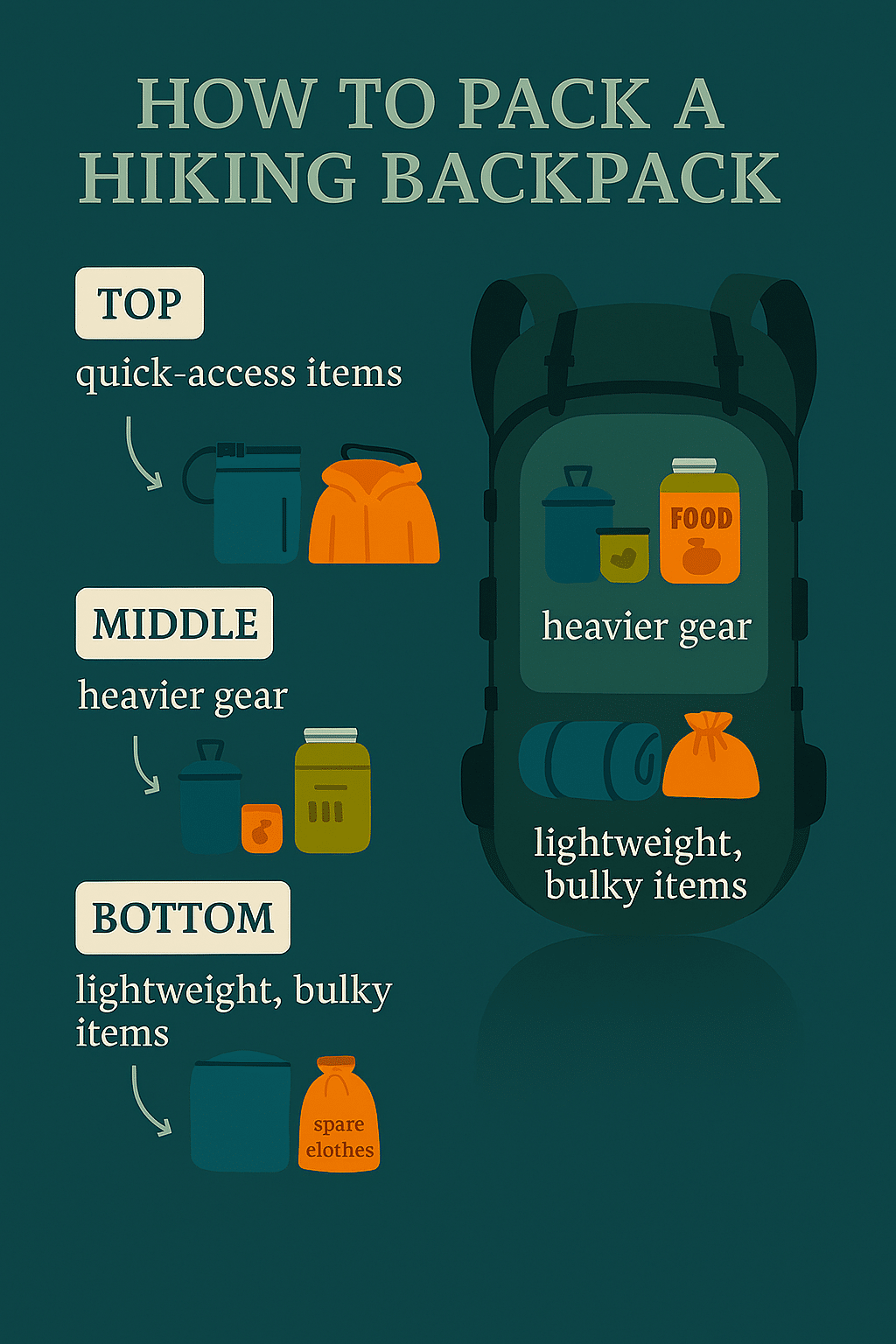
As a rule of thumb:
- Bottom: lightweight, bulky items you won’t need until camp (sleeping bag, spare clothes)
- Middle (close to your back): heavier gear to stabilise weight (cooking kit, food, stove, water filter)
- Top: quick-access items (snacks, sunscreen, water bladder, headlamp, rain jacket)
This setup keeps your load balanced while making sure the things you reach for most are always within easy reach.
Packing Strategies for Solo Hiking Trips
So how do you actually keep it all organised? My go-to system is a mix of packing cubes and dry bags. Packing cubes group similar items together. Almost like stacking lego blocks inside your pack. Dry bags add weather protection, keeping your spare clothes and food dry no matter what conditions you face.
With this system, your gear stays neat, protected, and easy to find. So you’ll never have to dump your whole pack out on the trail again.
Wrap Up
We’ve covered a lot: what to pack starting with the ten essentials, must-have tools for solo hikers, then the 20% rule to keep your load manageable. We then pivoted to practical packing strategies to keep your gear balanced and accessible. At the end of the day, remember don’t overcomplicate it. Packing well is a skill you’ll refine with every hike. Each trip teaches you what works, what doesn’t, and what you can leave behind. So pack smart, hit the trail, and enjoy the journey. Learn more about the best multi day packs here.